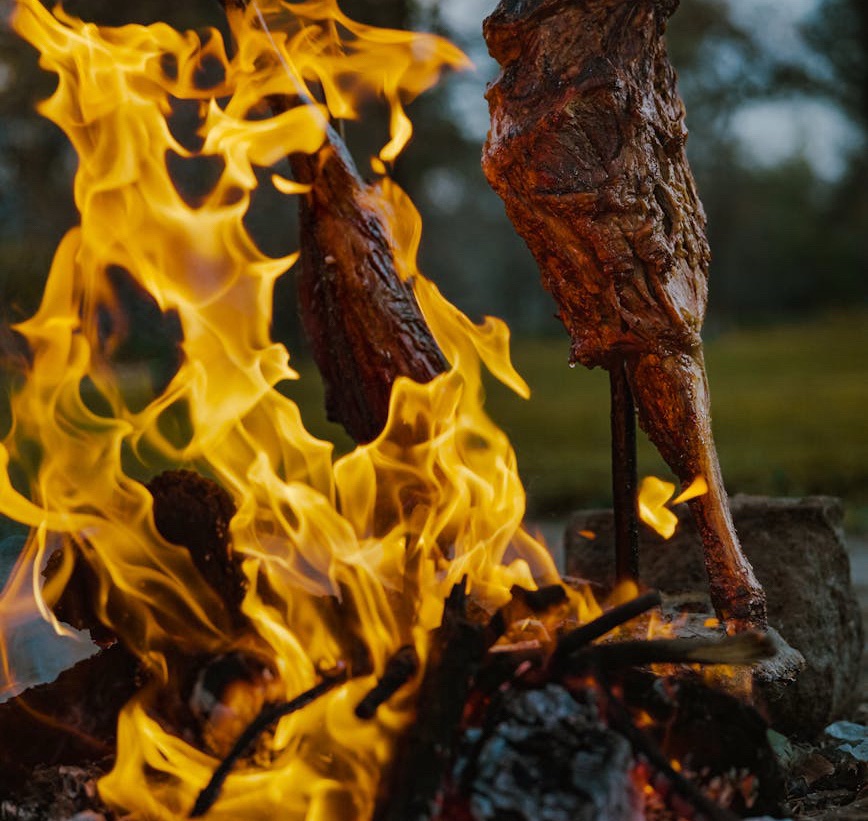
What if the first murder in human history wasn’t just about jealousy over a rejected gift… but about the rage that rises when true, wholehearted devotion exposes empty religion? Cain brought something acceptable. Abel brought something alive. And God saw the difference.
“By faith Abel offered to God a more excellent sacrifice than Cain, through which he obtained witness that he was righteous, God testifying of his gifts…” (Hebrews 11:4 NKJV)
Hey friends, I’ve been sitting with the early chapters of Genesis this Passover season in 2026, and the Holy Spirit keeps drawing me back to the powerful contrast between Cain and Abel. It feels like a pattern that echoes throughout Scripture and into our own walk with God today. Hopefully one rabbi out there will see something profound here.
After the Fall, God Himself provided covering for Adam and Eve with garments of skin. Since I am doubtful it was serpent skin, I imagine then—something had to die so their shame could be covered—something thick and warm like wool (God’s grace). Abel, growing up in that household, responded with faith. He brought the firstlings of his flock and their fat portions—the very best, the richest part. He placed a living sacrifice on the altar, and God had regard for both him and his offering.
Cain brought an offering from the field—the fruit of the ground. In the later Levitical system, this kind of gift would align with the grain offering, something God would later accept when brought with the right heart. Yet Cain’s offering was rejected, not primarily because of its type, but because it lacked the inner excellence and faith that marked Abel’s.
As David would later cry out in Psalm 51:16-17, “For You do not desire sacrifice, or else I would give it; You do not delight in burnt offering. The sacrifices of God are a broken spirit, a broken and a contrite heart—these, O God, You will not despise.” God has always been looking past the outward form to the condition of the heart.
Here’s where the picture deepens: Abel’s offering carries the beautiful type of the Bride. Not cold religion, but a living sacrifice fully given to the Lord. The fat burned on the altar wasn’t just extra—it was the richest, most valuable portion, always belonging to God in the sacrifices. And who doesn’t love the savory smell? Spiritually, it speaks of the hidden richness of a devoted heart: firstfruits faith, the overflow of love, and the deepest parts of ourselves laid down on the altar. The smell rising to heaven is not to be mistaken for a love of lamb chops. It is a spiritual savor (in type) that penetrates YHWH’s nostrils.
Religion can produce a polished, hardworking offering. You can toil in the fields of good works, reap a harvest, and pass it through the fire. It may look acceptable. But God searches for something deeper—the “fat portions,” the excellence that comes only from responding to His grace with wholehearted faith.
Abel’s younger-brother offering pleased the Father. And it enraged the older brother. That same spirit still surfaces today: when simple, blood-covered, Spirit-quickened devotion exposes the emptiness of self-effort and outward form, jealousy and anger often follow.
The true Bride isn’t known for impressive religious labor alone. She is known for being a living sacrifice—costly, surrendered, rich with the “fat” of inner devotion that rises as a sweet aroma to God. Outwardly she is without blemish, and there are many verses that support her outward appearance, but how often do we see our world leaders get sucked into that wicked one’s earthly fruits?
Final Thought
God is still looking for Abel’s kind of offering: not the minimum we can manage, but the best of our lives placed on the altar in faith. The Bride who gives her all—firstlings and fat portions—will always please the heart of the Father, even when it stirs the older brother spirit around her. Be wary of those who cast nets, snares, and traps that entangle believers into thinking no one can be perfect. Perfection once simply meant an acceptable offering, but today it means presenting ourselves as a living sacrifice, just like the offering Jesus took on for us. Let us turn to our forefathers—not to debate endless genealogies, but to learn the lesson so we may be approved by God, instant in season and out of season, always ready for our tree to be shaken and give fruit, and for our offering to rise savory and without blemish.
Author’s Note: Andrew here—this is my personal synthesis uncovering hidden gems that produce overcomers. These are typological reflections drawn from Scripture, and I share them humbly. I teach it subject to question and always welcome iron sharpening iron. It’s crucial to distinguish real heresy from differing interpretations. Everything I share is backed by Scripture and not widely accepted — it can easily provoke a brother to anger. An anger reminiscent of Cain. This view aims to honor the whole Bible, bear good fruit, and build up—not ruin—God’s people. Test it yourself!
 The Audio Missionary
Leave a comment